Get Started
Ready to See Your Risk?
Connect Amplifier to your existing tools in minutes.
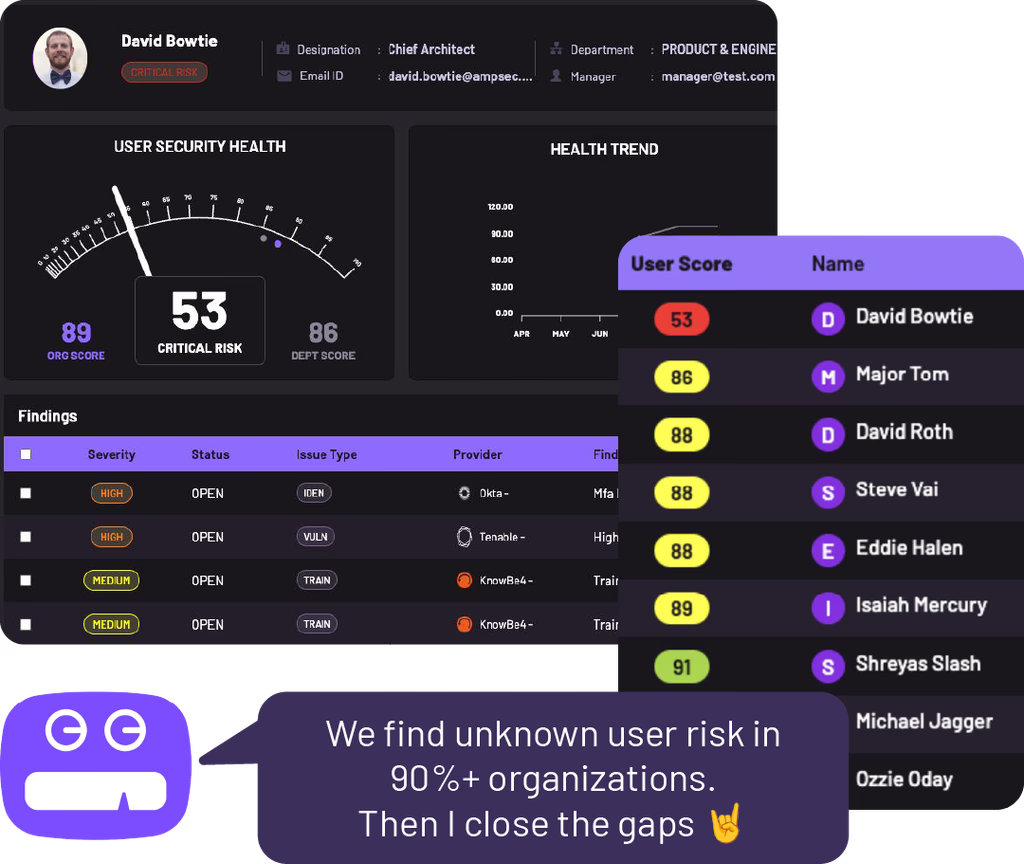
In less than a week, get a Human Risk Heatmap that shows which employees, devices, and behaviors put you most at risk.
SOLUTIONS
Security teams know the issues. Employees ignore the alerts.
Amplifier fixes problems by the people who create them.
Traditional security training happens once a year and hopes employees remember when threats arrive months later.
Amplifier delivers micro-trainings at the exact moment employees encounter real security risks — turning every vulnerability into an immediate learning opportunity that drives both awareness and action.
Security teams spend countless hours chasing employees to enable MFA, install patches, and fix device compliance issues through emails and tickets that get ignored.
Amplifier automates these conversations by engaging employees directly when hygiene gaps are detected, turning manual IT follow-ups into immediate self-service fixes.
Critical security patches sit in deployment queues for weeks while IT teams struggle to coordinate updates across hundreds of endpoints without disrupting productivity.
Amplifier turns vulnerability alerts into employee-driven remediation by guiding users through patches and updates during their natural workflow, closing security gaps in hours instead of months.
Employees regularly accumulate excessive permissions, share credentials, and bypass MFA requirements — creating identity risks that traditional IAM tools can detect but not resolve.
Amplifier closes these gaps through direct employee engagement, guiding users to clean up their access, enable proper authentication, and maintain secure identity practices in real-time.
Security operations centers drown in thousands of alerts daily, with analysts spending 80% of their time on manual triage and follow-up that rarely leads to actual remediation.
Amplifier transforms SOC alerts into direct employee conversations that resolve issues immediately, reducing analyst workload while ensuring critical findings actually get fixed instead of buried in ticketing systems.
Get Started
Connect Amplifier to your existing tools in minutes.
In less than a week, get a Human Risk Heatmap that shows which employees, devices, and behaviors put you most at risk.